The same behavior can mean different things in different settings. Detailed discussion may be welcome among friends who share an interest but less suitable when a cashier is waiting. Silence may feel comfortable with a close partner but uncertain during a job interview. Social context is the information surrounding the behavior.
Watch first
Reading Context and Unwritten Expectations
As you watch, notice which social expectations can be converted from vague assumptions into observable information and direct questions.
Replace hidden rules with observable questions
Instead of asking, “What am I supposed to know automatically?” examine the situation one piece at a time. Most social understanding is not mind-reading. It is a reasonable prediction based on context, observable behavior, prior experience, and direct clarification. Because it is a prediction, your first interpretation does not have to become your final conclusion.
This approach begins with an important principle from emotional regulation: your internal state affects what you notice and how you interpret it. When you are regulated, you may recognize several possible explanations for another person’s behavior. When you are anxious, triggered, sensory-overloaded, or emotionally flooded, uncertainty may feel like danger and one negative explanation may begin to feel like a fact.
1. Check your nervous-system state
Use the regulation zones from the previous course. In Green, you can usually observe, compare possibilities, and ask questions. In Yellow, you may become more sensitive to tone, delay, facial expression, interruption, or ambiguity. In Orange, language and flexible thinking may narrow. In Red, safety and stabilization—not social analysis—should be the priority.
Ask observable questions: “Am I rereading the message repeatedly?” “Has speech become harder?” “Am I reacting to ordinary sound or touch more strongly?” “Do I feel an urgent need to correct, defend, escape, or obtain reassurance?” These signs do not prove your interpretation is wrong. They tell you that you may need regulation before reaching a conclusion.
2. Name the emotion without treating it as evidence
Emotions provide information about your experience, but they do not automatically prove another person’s intention. Feeling rejected means that something registered as possible rejection; it does not yet establish that rejection occurred. Feeling embarrassed may point to social uncertainty, past criticism, or a fear of being misunderstood.
Ask: “What happened?” “What did I notice in my body?” “What action do I feel urged to take?” “What emotion family fits?” and “What need is underneath it?” You might discover, for example, that the urgent need to explain every detail is connected to anxiety and a need for accuracy—not evidence that the listener thinks you are incompetent.
3. Separate the present cue from triggers and accumulated load
A brief reply from a supervisor may resemble earlier criticism. A partner’s silence may activate memories of being ignored. A change in plans may feel personally rejecting when the deeper pressure is unpredictability. At the same time, fluorescent lighting, background conversation, poor sleep, unresolved conflict, and multiple transitions may have reduced your capacity before the interaction even began.
Ask: “What is happening now?” “What does this remind me of?” “What other demands are already using capacity?” and “Which part is social, sensory, emotional, or logistical?” This prevents several sources of distress from being compressed into one conclusion about another person’s motives.
4. Describe behavior before assigning meaning
Move from interpretation to observation. “She was rude” becomes “She answered with five words, did not ask a follow-up question, and returned to her computer.” “He is angry with me” becomes “He spoke more loudly than usual, crossed his arms, and ended the conversation.” The observations may support your concern, but they may also fit other explanations.
What did I directly observe?
Words, actions, timing, volume, distance, changes, and repeated patterns.
What meaning did I add?
Rude, bored, angry, rejecting, dishonest, controlling, or disappointed.
What else could fit?
Time pressure, fatigue, distraction, stress, uncertainty, habit, or a different communication style.
What needs clarification?
The person’s intention, preference, capacity, expectation, or desired next step.
5. Examine the situation around the behavior
Ask what kind of setting you are in, what activity is occurring, what roles people have, how much time is available, and what the group is trying to accomplish. A short answer during a deadline may communicate limited time rather than dislike. Detailed correction may be welcome in a quality-control meeting but feel disruptive during an early brainstorming session. Personal disclosure that fits a close friendship may not fit a first professional conversation.
Context helps you estimate what is likely; it does not create a requirement to perform a socially “normal” role. The goal is not masking or suppressing your authentic personality. The goal is understanding the situation well enough to make an informed choice.
6. Look for patterns, not isolated signals
One crossed arm, delayed text, short reply, yawn, or missed invitation is weak evidence by itself. Look for clusters and repetition. Does the person turn away and stop asking questions and repeatedly return to another task? Do they initiate contact later? Is this behavior different from their usual style? A pattern across time is generally more informative than a single ambiguous cue.
7. Test the interpretation with a direct question
When the answer matters, clarification is more reliable than prolonged analysis. Keep the question neutral, specific, and easy to answer. “Are you mad at me?” may pressure someone to manage your fear. “Your replies became shorter after we discussed the deadline. Is something unresolved, or are you simply short on time?” identifies the observation and offers room for correction.
8. Pause when interpretation is no longer productive
If you are flooded, repeating the question, defending yourself, or demanding immediate certainty may intensify the misunderstanding. Use the same pause-and-return structure learned earlier: state your condition, protect the relationship, ask for specific space, choose a check-in time, and explain how you will return.
After a shutdown, meltdown, or conflict, recover before conducting a detailed social review. Then repair any impact without turning the event into a character verdict. You can say, “I was overloaded and interpreted your question as criticism. I responded sharply. I am sorry for the impact. Next time I will ask whether you want clarification before assuming I am being challenged.”
Add recurring situations to your personal regulation plan. Record the cues you tend to misread under stress, the questions that help, the environments that reduce capacity, and the scripts you want available. Over time, the aim is not perfect interpretation. It is earlier awareness, fewer assumptions, clearer questions, and faster repair when an interpretation turns out to be inaccurate.
Examples
Useful scripts
Map one social situation
Key takeaways
- Context changes the likely meaning of behavior.
- Cues are evidence, not certainty.
- Direct clarification is a social skill, not a failure.
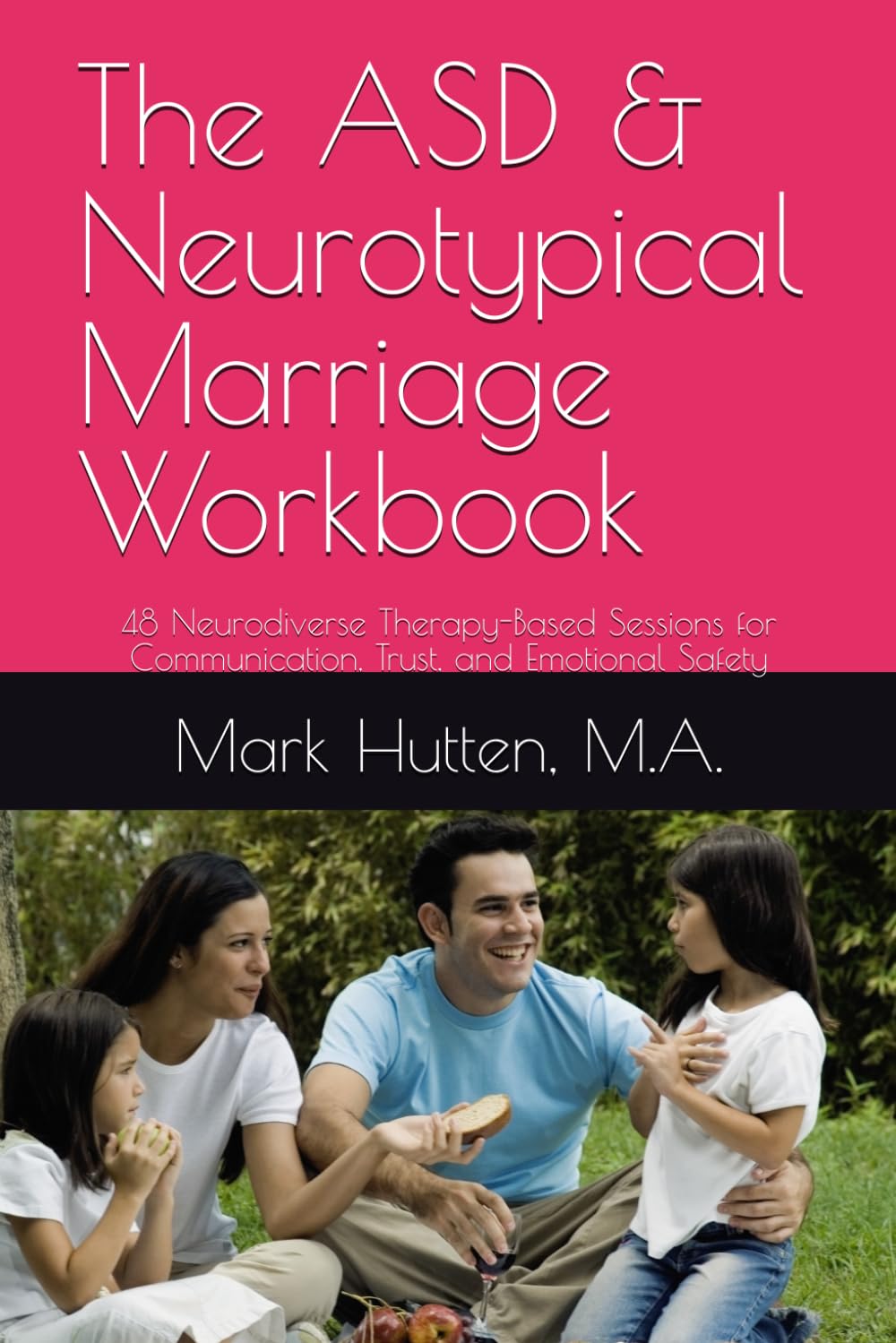
Recommended resource
The ASD & Neurotypical Marriage Workbook
48 Neurodiverse Therapy-Based Sessions for Communication, Trust, and Emotional Safety. Practice replacing assumptions with explicit communication, learning each partner’s perspective, and building clearer expectations in a neurodiverse relationship.
View the book on Amazon →
Individual support
Book a Private Coaching Session
Apply these tools to the situations that create the most uncertainty for you.
Schedule a private session →