Emotional flooding is the point at which your nervous system becomes too activated or overloaded to keep processing the situation effectively. You may still be physically present, but the abilities required for a productive conversation—language, perspective-taking, flexible thinking, memory, impulse control, and problem-solving—may be sharply reduced.
This is why trying harder often makes the situation worse. You are attempting to use abilities that are temporarily less available while additional words, questions, emotions, and demands continue to enter the system. During flooding, the immediate task is not to win the argument, explain yourself perfectly, or reach a final decision. The immediate task is to prevent further overload and create conditions in which those abilities can return.
Watch first
What to Do When Emotional Flooding Takes Over
As you watch, notice what abilities become less available when you are flooded and which actions could help you reduce pressure before attempting to solve the problem.
Recognizing emotional flooding
Flooding is more intense than ordinary discomfort. It may involve anxiety, anger, shame, sensory distress, confusion, or several of these at once. Common signs include:
- Words becoming difficult to find, understand, or organize
- Repeating the same point without being able to move forward
- Hearing neutral statements as accusations or threats
- An urgent need to escape, hide, defend, correct, or end the conversation
- Shaking, sweating, rapid heartbeat, nausea, dizziness, or pressure in the body
- Going silent, numb, detached, blank, or unable to initiate movement
- Becoming unusually rigid about details, sequence, fairness, or exact wording
- Feeling as though one more question or sound will be unbearable
This is not the time for deeper processing
When flooded, you may feel intense pressure to resolve the situation immediately. Perhaps uncertainty feels intolerable. Perhaps the other person wants reassurance. Perhaps leaving a conversation has previously led to accusations that you do not care. The urgency is understandable, but it does not mean your nervous system is ready.
A flooded conversation often produces more injury than clarity. You may say things too broadly, agree to something you cannot sustain, interpret intentions inaccurately, or become stuck defending a detail while missing the larger issue. The other person may increase intensity because your shutdown looks like indifference, which adds even more pressure.
Use the P.A.U.S.E. protocol
A predetermined sequence is easier to access than improvisation. P.A.U.S.E. gives you six steps to follow when complex thinking is limited.
Put a stop to new input
Stopping input is not avoidance when your processing system is already overloaded. It is the emotional equivalent of stopping additional water from entering an overflowing container. The most helpful first move may be putting down the phone, ending the discussion, leaving a crowded environment, or asking others to stop explaining.
Announce the pause
Abruptly leaving without explanation may protect you in the moment but frighten or anger another person. A short, practiced statement makes the pause more predictable. You do not need to justify every detail. You need to communicate capacity, intention, and next step.
Unload the environment
Emotional and sensory activation interact. You may not be able to reduce the emotional issue immediately, but you can often reduce environmental demands. Even modest changes—turning off a light, removing tight clothing, facing away from movement, or reducing speech—can return some capacity.
Support the body
Regulation strategies are personal. Deep breathing may help one person and increase self-consciousness in another. Eye contact may feel connecting to one person and intensely demanding to another. The best strategy is not the one that looks most calming from the outside. It is the one that safely helps your nervous system reduce activation.
Regulation does not mean forcing yourself to look calm
Masking can create the appearance of regulation while distress continues to build. You may hold your body still, control your facial expression, and say the expected words while losing the ability to process what is happening. This may reassure other people temporarily, but it can delay recovery and increase the likelihood of shutdown or meltdown later.
Authentic regulation may include pacing, rocking, using headphones, lying under a weighted blanket, repeating familiar information, being alone, or communicating through text. These actions should be safe and respectful of others, but they do not need to resemble conventional relaxation.
A pause needs a reliable return
Pausing protects the conversation only when both people can trust that the issue will not disappear indefinitely. A return time should be specific enough to create predictability and realistic enough to honor recovery.
“Later” may be too vague. “In twenty minutes” may be too soon if you routinely need two hours. A better statement might be: “I will check my capacity at 7:00. If I’m ready, we’ll talk for fifteen minutes. If I’m not, I’ll tell you when I can return tomorrow.”
When you return, reduce complexity. Discuss one concern rather than the entire history of the relationship. Consider written notes. Agree on the purpose of the conversation: understanding, making a decision, apologizing, or creating a plan. Do not assume that returning means you must complete everything in one sitting.
Words to prepare before flooding happens
“I’m approaching overload. We have about five more minutes before I need to stop.”
“I care about this, and I cannot process it safely right now. I need forty-five minutes without discussion. I will return at 8:00.”
“Words are not available. I am safe. I need quiet. I will text you when I can communicate.”
“I’m experiencing a temporary processing overload. I need ten minutes in a quieter space, then I can address the highest-priority item.”
“More questions are increasing the overload. I am not refusing the conversation. I am pausing it until 6:30.”
“I can talk now if we stay with one issue for fifteen minutes. I want to begin by making sure I understood your main concern.”
Real-life examples
Relationship example
Morgan’s partner raises a concern at the end of a demanding workday. Morgan begins correcting small details and speaking more loudly. The partner interprets this as defensiveness and adds examples. Morgan recognizes flooding and uses the prepared script: “I care about what you’re saying, and I cannot process more examples. I need one hour. I will come back at 8:30 with a written summary of what I heard.”
During the pause, Morgan turns off overhead lights, eats, walks, and writes three sentences. At 8:30, the conversation resumes with one issue. The problem is not instantly solved, but neither person has to recover from an escalating fight.
Workplace example
During a noisy meeting, Riley is asked to explain an unexpected error. Speech becomes difficult and several people ask questions at once. Instead of guessing or going silent without context, Riley says, “I need to review the information in writing. Please send me the three questions you need answered. I will respond by 3:00.” This changes the task from rapid verbal processing to structured written processing.
What to avoid while flooded
- Making permanent relationship or employment decisions
- Sending long messages intended to explain everything
- Driving if your attention, vision, or body feels unsafe
- Using alcohol or substances as the primary regulation strategy
- Demanding that another person resolve your internal state immediately
- Continuing a discussion to prove that you are not avoidant
- Shaming yourself for needing more recovery time than someone else
If flooding includes urges to harm yourself or someone else, move away from weapons or dangerous situations and contact emergency or crisis support in your area. Safety takes priority over completing any conversation.
Interactive exercise
Build your personal flooding plan
Complete this while calm. During flooding, you should not have to invent the plan.
Key takeaways
- Flooding temporarily reduces language, flexibility, perspective-taking, memory, and problem-solving.
- The goal during flooding is stabilization—not resolution.
- Use P.A.U.S.E.: stop new input, announce the pause, unload the environment, support the body, expect recovery, and return with structure.
- Authentic regulation does not need to look conventionally calm.
- A pause becomes safer for relationships when it includes a reliable plan to return.
- Prepare scripts and environmental supports while calm so they are available when thinking becomes difficult.
Recommended resource
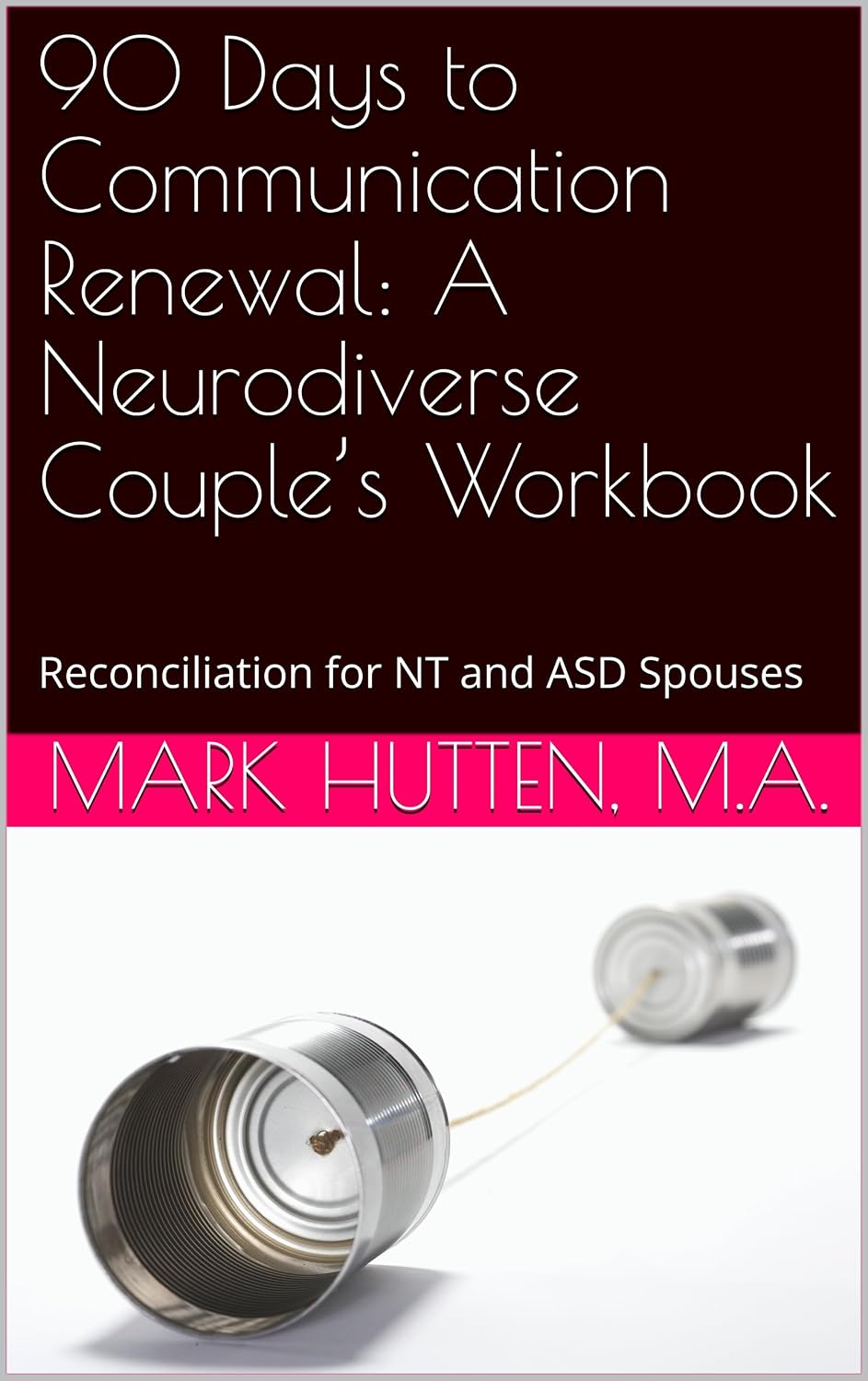
90 Days to Communication Renewal
A Neurodiverse Couple’s Workbook: Reconciliation for Neurotypical and ASD Spouses. Practice safer communication, structured pauses, conflict repair, and reconnection through guided exercises for neurodiverse couples.
View the book on Amazon →
Individual support
Book a Private Coaching Session
Work privately with Mark Hutten, M.A., to create an individualized flooding and recovery plan for your relationships, workplace, and daily life.
Schedule a private session →