Someone asks, “How do you feel?” You search for an answer and find nothing definite. Perhaps you say “fine,” “stressed,” or “I don’t know.” Hours later, the answer becomes obvious. You were hurt. Embarrassed. Anxious. Disappointed. Or perhaps several emotions were present at the same time.
Difficulty identifying an emotion does not mean the emotion is absent. It means the information has not yet become clear enough to name. The goal of emotional awareness is not instant accuracy. The goal is to become a better observer of your own internal experience.
Watch first
Understanding and Identifying Your Emotions
As you watch, notice whether you recognize emotions immediately or understand them later. Choose one idea that could help you observe your internal experience with less pressure.
Why emotions can be difficult to identify
Some autistic adults experience alexithymia—a difficulty recognizing, distinguishing, or describing emotions. It can be hard to translate internal sensations into emotional language. Anxiety may feel like nausea. Anger may first appear as pressure behind the eyes. Sadness may feel like exhaustion. Excitement and fear can both produce a racing heart.
There are other reasons the answer may be unclear. You may have learned that certain emotions were unacceptable. You may focus on solving the external problem before noticing your internal response. Sensory discomfort, hunger, pain, fatigue, and emotion may overlap. You may also feel several emotions that appear contradictory.
Emotional awareness may be delayed
Many people expect emotion to work like an instant notification: something happens, you know how you feel, and you explain it. Your process may work more like delayed processing. During the event, your attention is occupied by conversation, sensory input, social interpretation, or figuring out what to do. Only after the demands decrease can your nervous system process the emotional meaning.
This delay can create relationship misunderstandings. You may agree to something and recognize resentment later. You may appear calm during conflict and become distressed after the other person believes the issue is over. You may give one explanation, then revise it once you have more information.
Delayed awareness is not dishonesty or manipulation. However, it helps to explain the process and create a reliable way to revisit important conversations.
Five sources of emotional information
Instead of starting with “What exact emotion is this?” gather information in five steps. Think of yourself as forming a reasonable hypothesis, not taking a test with one correct answer.
The need is not proof of a particular emotion, but it offers another clue. Wanting reassurance may point toward fear or uncertainty. Wanting an apology may point toward hurt or anger. Wanting to share news may point toward joy or pride.
Start with emotion families
A list containing hundreds of emotion words can create more confusion. Begin with broad families, then add precision only when it is useful.
Fear
Uneasy, worried, anxious, threatened, panicked, uncertain, exposed.
Anger
Irritated, frustrated, resentful, offended, furious, treated unfairly.
Sadness
Disappointed, lonely, hurt, discouraged, grieving, hopeless.
Shame
Embarrassed, inadequate, rejected, defective, guilty, humiliated.
Joy
Relieved, pleased, excited, proud, playful, hopeful, satisfied.
Connection
Safe, accepted, understood, affectionate, grateful, trusting.
You may choose more than one family. For example, receiving a promotion can create joy about the recognition and fear about the new responsibilities. A partner requesting space can create respect for their need, sadness about the distance, and anxiety about what it means.
Communicating before you have the answer
Other people sometimes interpret “I don’t know” as avoidance. A fuller statement explains your process and gives the conversation a next step.
“I know I’m having a reaction, but I can’t identify it yet. I need some quiet time, and I’ll come back to this tonight.”
“I’m at about a seven out of ten. I don’t have the right emotion word, so I need to slow this conversation down.”
“Part of me is excited, and another part feels uneasy. I need more information before I can give you a clear answer.”
“I can write about this more clearly than I can talk about it. Can I send you my response later?”
“I understand my reaction better now than I did yesterday. I wasn’t trying to mislead you; the emotion became clearer after I had time to process.”
What this looks like in real life
Relationship example
Sam’s partner cancels their evening plans. Sam says it is fine, then becomes critical about unrelated household tasks. Using the five clues, Sam notices the situation involved unexpected change, the body feels heavy, and the action urge is to withdraw. The closest emotion families are sadness and anger. The underlying need is reassurance that their time together still matters.
Workplace example
Alex receives brief feedback from a supervisor: “We need to discuss your report.” Alex cannot concentrate for the rest of the afternoon. The situation contains uncertainty, the body feels tense, and the action urge is to review every possible mistake. The likely emotion family is fear, and the immediate need is information.
Interactive exercise
Build an emotion map
Choose one recent moment when your internal state changed. Approximate answers are welcome.
Key takeaways
- Difficulty naming an emotion does not mean you are not having one.
- Emotional awareness may arrive after the event, when processing demands decrease.
- You can gather clues from the situation, your body, your action urge, an emotion family, and the underlying need.
- A broad, approximate emotion word is often more useful than waiting for perfect certainty.
- “I don’t know yet” becomes more relationally helpful when paired with a plan to revisit the conversation.
- Your first emotional label is a hypothesis that can be revised as you understand more.
Recommended resource
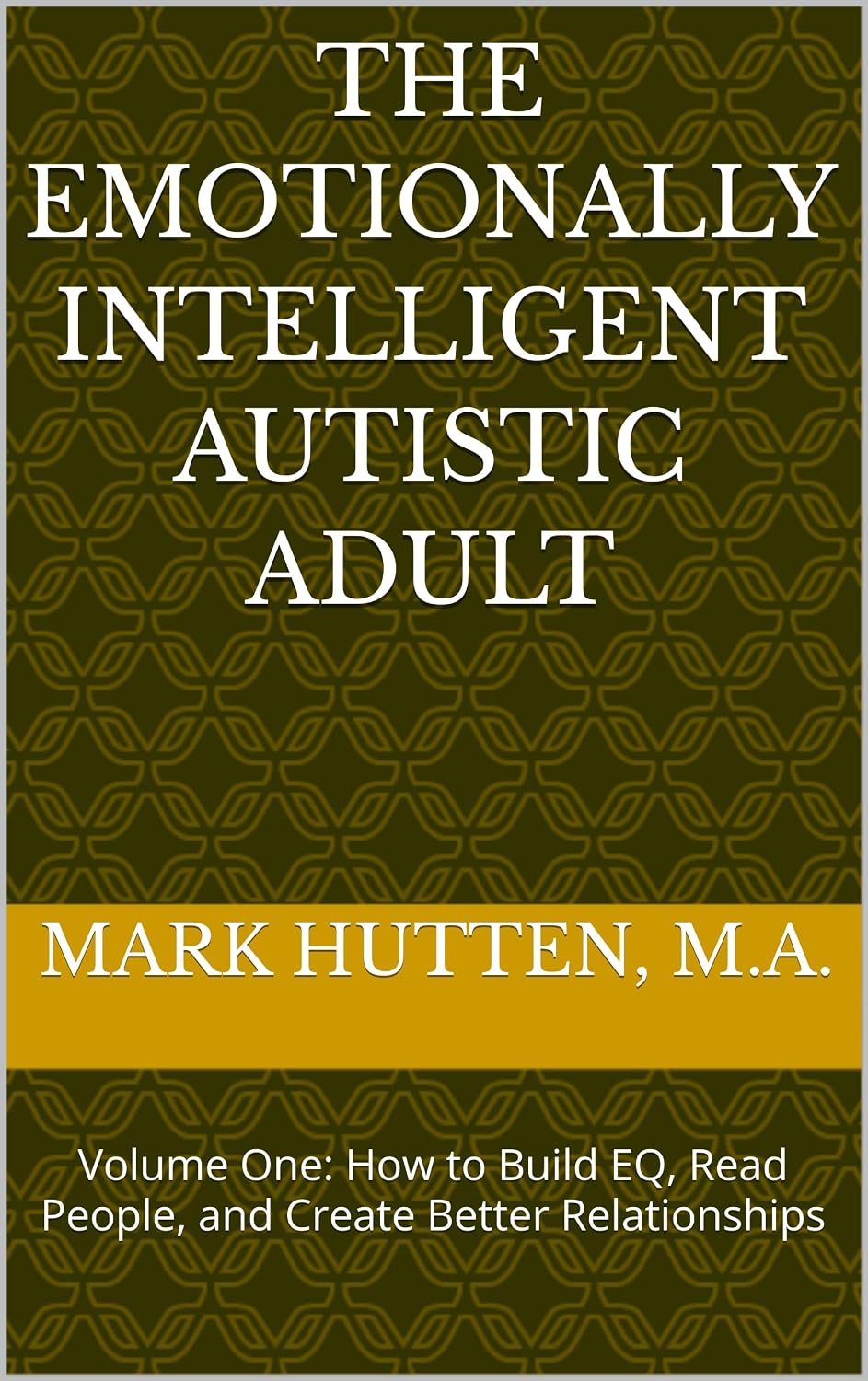
The Emotionally Intelligent Autistic Adult
Volume One: How to Build EQ, Read People, and Create Better Relationships. Continue developing emotional awareness with practical tools designed specifically for autistic adults.
View the book on Amazon →
Individual support
Book a Private Coaching Session
Work privately with Mark Hutten, M.A., to apply these skills to your specific relationships, challenges, and goals.
Schedule a private session →