A conversation can look effortless from the outside while requiring many rapid decisions on the inside. You may be trying to determine whether interaction is welcome, choose a topic, calculate how much detail to give, monitor the other person’s reactions, decide when to speak, and prepare an exit—all while managing noise, anxiety, eye contact, body language, and the fear of being misunderstood. When those tasks pile up, even saying hello can feel like the first move in a complicated game whose rules were never explained.
The solution is not to become endlessly spontaneous or to perform a more socially acceptable version of yourself. It is to make the process more visible. A conversation has stages. You can prepare for those stages, use reliable language, observe what happens, and adjust without treating every awkward moment as failure.
Watch first
Starting, Joining, and Ending Conversations
As you watch, notice which entry, participation, and exit strategies could make everyday conversations clearer and less demanding.
Why openings and endings create so much pressure
The beginning of a conversation contains uncertainty. You do not yet know whether the other person has time, energy, interest, or permission to talk. If past attempts have ended in criticism, exclusion, or embarrassment, your nervous system may treat that uncertainty as danger. You may rehearse so long that the opportunity passes, enter too urgently because you fear losing the moment, or avoid the interaction altogether.
Endings carry a different uncertainty. You may worry that leaving will seem rude, that the other person expects more, or that you need a socially impressive reason to stop. As a result, you may remain until your energy is depleted, suddenly disappear when overload becomes intolerable, or use increasingly short replies while hoping the other person notices. Clear endings solve much of this ambiguity.
Prepare your capacity before preparing your words
Before entering a conversation, briefly check your regulation level. If you are in Green, you may have enough capacity for an open-ended interaction. In Yellow, a shorter conversation with a predictable topic may work better. In Orange, you may choose a functional exchange—asking one question, giving one update, or greeting someone without staying. In Red, stabilization is more important than social participation.
Then notice the environment. A quiet hallway, shared activity, or scheduled break may offer a manageable opening. A loud room, fast-moving group, or person focused on a deadline may require a shorter approach or a different time. This is not about waiting for perfect conditions. It is about matching the size of the interaction to the capacity and opportunity actually available.
It can help to choose a small purpose: “I want to greet my new colleague,” “I want to ask whether Jordan enjoyed the event,” or “I want to contribute one relevant idea.” A small purpose gives the conversation direction without forcing a particular outcome.
Starting: notice, connect, and invite
Conversation openings are not auditions. Their purpose is to establish shared attention and discover whether interaction is welcome. Ordinary language often works better than a brilliant opening because it is easier for both people to understand and answer.
You do not need all three parts every time. “Hi, I’m Mark. I don’t think we’ve met” may be enough. With someone you already know, a continuation is often easier than creating a new topic: “How did the appointment go?” or “You mentioned a project last week—did it work out?” Remembering a previous detail communicates interest without requiring emotional intensity.
Begin with lower-personal topics unless the relationship and setting support greater depth. Shared activities, current surroundings, familiar interests, or recent events usually create a safer bridge. Personal questions can become more specific as mutual interest develops.
Joining a conversation already in progress
Joining a group is harder because the conversation already has momentum. Begin by approaching at a comfortable distance and listening long enough to identify the current topic. You are not eavesdropping when your presence is visible and the setting is socially open; you are gathering the context needed to contribute.
Look for a natural gap: a completed sentence, a laugh that settles, a shift in topic, or someone looking toward you. If the group changes position to include you, makes eye contact, or offers a brief summary, those are useful signs that entry is welcome. You can join by connecting directly to the last point rather than introducing an unrelated subject.
If no gap appears, the group may be absorbed, rushed, or operating with a rhythm that is difficult to enter. That is not reliable proof that you are unwanted. You can wait for the topic to change, approach one person later, or decide that the energy cost is not worthwhile. Choosing not to enter is also a valid social decision.
Creating flow during the first few minutes
Once the conversation begins, you do not have to carry it alone. Think of the opening minutes as a series of small exchanges rather than one performance. Listen for a detail you genuinely understand or care about, respond to that detail, and then leave room for the other person.
A useful rhythm is answer, add, return. Answer what was asked, add one related detail, and return the conversation with a question or invitation. If someone asks whether you enjoyed a conference, you might say, “Yes. The session on workplace communication was especially useful because it gave concrete examples. Which session stood out to you?” This prevents both one-word answers and long explanations that leave no clear entry point.
Questions do not need to form an interview. Mix questions with observations, small disclosures, and acknowledgments. “That sounds exhausting” or “I had a similar reaction” may create more connection than immediately asking another question. When you share an interest, offer one layer of detail and wait. If the person asks a follow-up question, add another layer. This allows depth to grow through mutual participation.
Recognizing whether the conversation is welcome
No single cue proves interest or disinterest. A person may look away while listening, give short answers because they are tired, or avoid eye contact because of their own neurotype. Look for patterns and compare the behavior with the situation.
Signs that support continued conversation may include follow-up questions, related disclosures, relaxed pacing, turning toward you, introducing a new but connected topic, or returning after an interruption. Signs that the interaction may need to become shorter include repeatedly looking toward a task or exit, giving several minimal answers without adding information, stepping away, checking the time, or stating that they need to leave.
When the cues remain uncertain, use an observable question instead of prolonged guessing: “Do you have a few minutes to talk?” “Is now a good time?” or “Would you like to keep talking about this, or return to what you were doing?” Direct clarification is not evidence that you failed to read the situation. It is one of the most accurate ways to understand it.
Ending clearly and respectfully
A conversation does not have to continue until both people run out of words. Ending while the exchange is still positive can protect energy and make future contact easier. A useful exit contains three parts: acknowledge the interaction, state the transition, and close warmly.
You do not always need to give a reason. “I’m going to move on, but it was nice talking with you” is enough. A brief, truthful reason may reduce ambiguity, but a detailed defense of your departure can make the ending feel more complicated than necessary.
Handling pauses, interruptions, and awkward moments
Silence does not automatically mean failure. People pause to think, notice the environment, or decide what comes next. You can allow a few seconds, return to the shared setting, or close the conversation. “I’ve enjoyed talking with you” can turn an ordinary pause into a natural ending.
If you interrupt, a simple repair is usually enough: “I’m sorry—I spoke over you. Please finish.” If you lose your point, say so without shame: “I lost the thread of what I was saying. The main point was…” If you realize that you gave more detail than the moment allowed, you can summarize: “I went deeper than I intended. The short version is that the project is on schedule.”
If another person does not respond warmly, resist turning one interaction into a verdict about your social ability or value. They may be distracted, unavailable, uncomfortable, or simply not compatible. Review the observable facts, identify anything useful to adjust, and allow the rest to remain uncertain.
Real-life examples
Meeting a new colleague
Alex notices a new employee standing near the break-room counter. Instead of searching for an original question, Alex says, “Hi, I’m Alex. I don’t think we’ve met.” The employee introduces herself, and Alex adds, “I work with the support team on the second floor. Which group are you joining?” When she answers briefly and begins preparing coffee, Alex recognizes that the conversation may be complete. “Welcome to the company. I hope your first week goes smoothly.” The exchange lasts less than a minute, but it creates familiarity for the next meeting.
Joining a discussion about a shared interest
Sam hears two people at a community event discussing a science-fiction series Sam enjoys. Sam stands where both can see the approach, listens until one person finishes, and says, “Are you talking about the second season? I thought the change in the main character was interesting.” One person asks what Sam thought of the ending. That follow-up question gives Sam permission to add more detail. Sam answers, asks which episode they preferred, and lets the conversation develop through shared interest rather than trying to prove expertise.
Leaving before overload
Taylor is enjoying a family gathering but notices rising sound sensitivity, difficulty following speech, and an urge to become unusually blunt. In the past, Taylor stayed until irritability caused conflict. This time, Taylor says, “I’m glad I came, and I’m reaching my limit with the noise. I’m going to head home while I can still drive comfortably. Thank you for inviting me.” Leaving earlier protects both regulation and the relationship.
Interactive exercise
Create your conversation plan
Key takeaways
- Conversation is a sequence of manageable stages, not a test of spontaneous brilliance.
- Check your capacity and the setting before deciding how much interaction fits.
- Start with shared context, a brief connection, and a low-pressure invitation.
- Join groups by listening for the current topic and entering at a natural gap.
- Use answer, add, and return to create balanced early flow.
- Look for patterns of response rather than treating one cue as proof.
- Clear endings protect energy and reduce ambiguity.
- Awkward moments usually require a small repair—not self-condemnation.
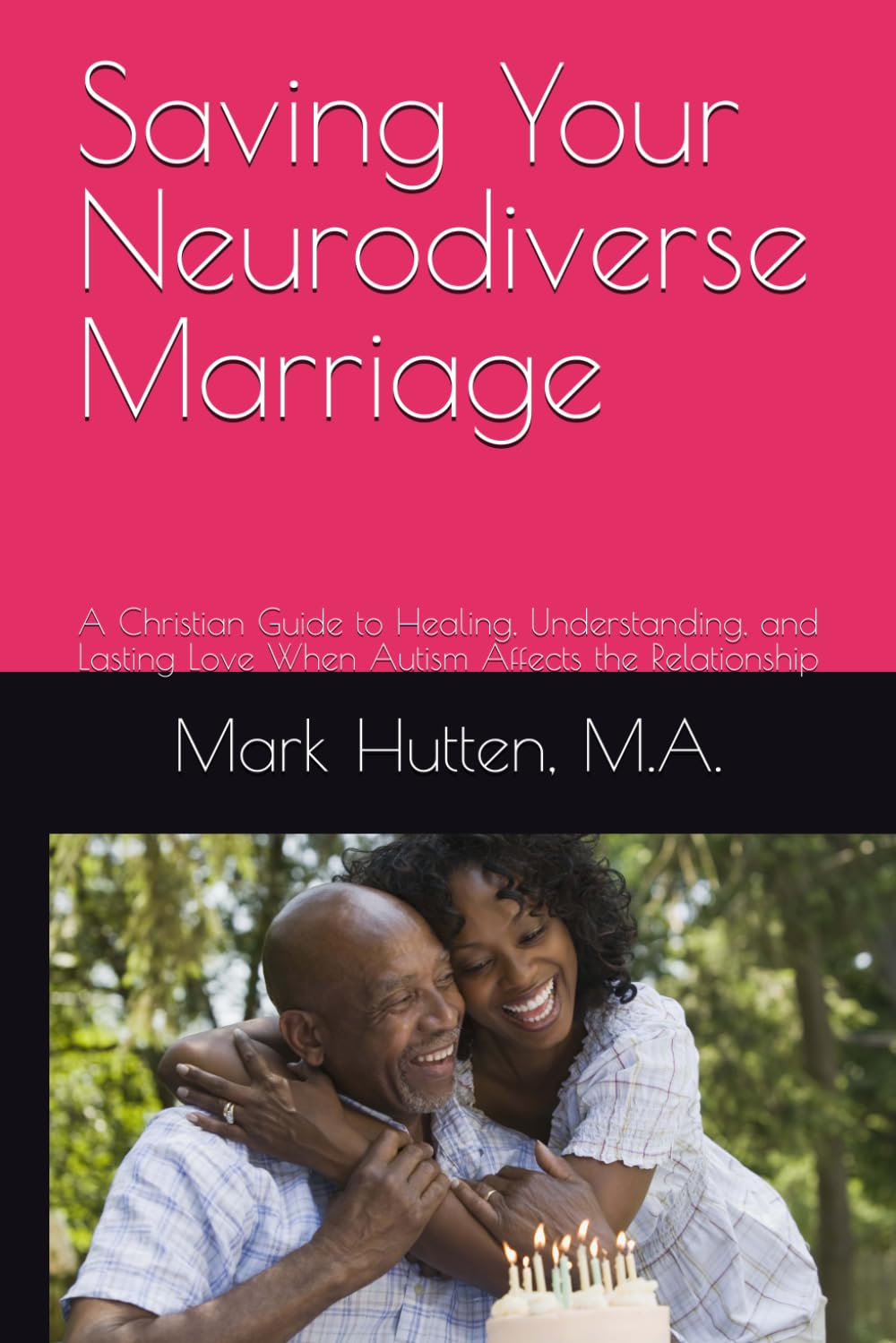
Recommended resource
Saving Your Neurodiverse Marriage
A Christian Guide to Healing, Understanding, and Lasting Love When Autism Affects the Relationship. Continue strengthening the everyday communication, mutual understanding, emotional safety, and repair skills that help neurodiverse partners reconnect.
View the book on Amazon →
Individual support
Book a Private Coaching Session
Develop conversation scripts and social-energy strategies for the situations that matter most in your relationships, community, and workplace.
Schedule a session →